
Bathroom renovation is one of the most time-consuming jobs, not only because of the variety of work performed, but also the associated restriction of access to the bathrooms, which must be taken into account when planning the organization of work. A comprehensive bathroom renovation usually involves replacing cold and hot water pipes, sewage, plumbing, as well as removing old wall and floor coverings and replacing them with new tiles.
MOUNTAŽNIK is a plumbing and electrical engineering store Buy plumbing in Kropyvnytskyi , as well as an online store where you can find everything for the bathroom and not only Swimming pools in Kropyvnytskyi .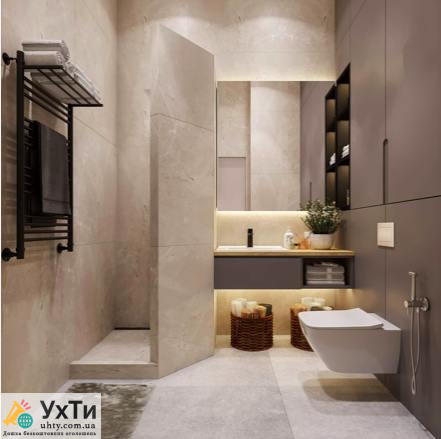
Pipe replacement
First, we replace the pipes, but we decide in advance where we will install the bathtub, shower tray, washbasin or toilet seat. This plumbing should be purchased at the installation stage, which will make it easier for the contractor to adjust the pipe outlets to specific devices. We also need to decide whether we will run the pipes in grooves under the plaster or behind the so-called mounting wall. During further work, the pipe outlets to the battery are closed with special plugs, which make it possible to plaster the walls and lay tiles.

Laying tiles
Before laying tiles in areas particularly prone to splashes during use (around the bathtub, shower tray), moisture insulation should be laid, as, unlike the appearance, such cladding is not waterproof and this may lead to the wall in the room adjacent to the bathroom getting wet.
Liquid film is a ready-to-use waterproofing for the bathroom. Also, waterproofing should be laid under the tiles on the floor to protect the lower floor from flooding. Final assembly and connection to the plumbing installation is carried out after the walls and floor of the bathroom are fully finished.
Toilet connection
Installing new plumbing fixtures can be challenging when their connection, especially to the sewer, requires certain conditions. When deciding to install a wall-hung toilet, you should check whether it can be installed in the chosen location without major changes to the installation. The main limitation when choosing a location for such a toilet will be the location of the inlet to the sewer pipe. Depending on the type of previously installed vessel, the waste is discharged under the toilet, into a pipe passing through the ceiling or to the back of the bowl through an external pipe. In the case of a bottom outlet, the distance between the hole in the ceiling and the wall is important for installation possibilities. It determines the distance between the frame and the mounting plane and cannot be greater than the length of the mounting brackets allows, and cannot be too small, which would make it difficult to connect the drain. It should approximately be 7-15 cm from the axis of the drain, unless the manufacturer of a particular frame specifies other values in the assembly instructions. It will be easier to regulate the output using pipes located on the ceiling and adapted to connect a Poznan-type toilet. By connecting the elbows at different angles to sections of the sewer pipe, it is easy to choose their appropriate configuration for 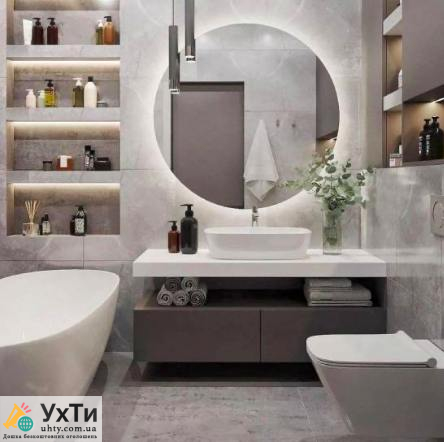 connection to the sewer.
Bathtub fittings and body
Most bathtubs currently produced are so-called acrylic bathtubs, and due to the ease of molding, they allow you to get a variety of shapes - from traditional rectangular to semicircular symmetrical and asymmetrical (angular), oval or round. Depending on the planned location of the bathroom, it can be located near the wall or in the middle of the room, taking into account the location of the drain connected to the sewer. The installation and enclosure of the bathtub must be preceded by the preparation of the place for its installation. The floor must already be tiled. If the bathtub is located near the wall, the surface must also be covered with a liquid film before laying the tiles. Water flowing down the wall penetrates through the seams, which can lead to dampness of the wall and, as a result, to the development of mold in the adjacent room.
The flexible Flex-type building plate makes it much easier to install round, semi-circular or corner bathtubs. With multi-hole mixers installed on the edge of the bathtub, it is worth installing a large inspection door in the wall to the adjacent room. They will allow easy access to the fittings for possible repairs, as well as for placing a container in which water flowing from the shower hose is collected, if it is not hidden in a special cover. Since the outlet pipe to the sewer must be laid with a slope of at least 2%, when placing the siphon directly on the floor we have a limited permissible distance from the sewer riser - most often up to 2-2.5 m. parts.
Drain pipe in the bathroom floor
The easiest way to enclose the space under the bathtub is to install a ready-made cover, which is available for many bathtub models. If necessary, it can be easily dismantled, gaining convenient access to the entire space. This solution is especially recommended in hot tubs, since the installation placed under it requires periodic maintenance. We can create a permanent bathtub body on a screening structure using a ready-made polystyrene foam carrier for bathtubs (for certain models), brick it up or assemble a frame from steel profiles. Ceramic tiles, mosaics or exotic wood cladding are used as a decorative coating. An inspection hole should be left in the body near the siphon, even if it allows cleaning "from above", which will allow you to monitor the space under the bathtub (for example, to detect leaks), as well as carry out any repairs. The inspection hole is usually closed by an element of the body cladding (for example, a ceramic plate) attached with magnets.
Shower cabin or pool on the floor?
Shower enthusiasts can decide to insert a shower cabin or create a flat children's pool with a point or linear drain in the floor. When choosing a shower cabin, it is best to opt for a full-wall version, thanks to which we will get great freedom in planning its location, and its installation does not require, for example, laying pipes in the wall, careful insulation under the tiles and avoiding problematic sealing with silicone, which is often covered with mold. These cabins are often equipped with additional accessories - a rain shower, massage shower panels, lighting and even a radio.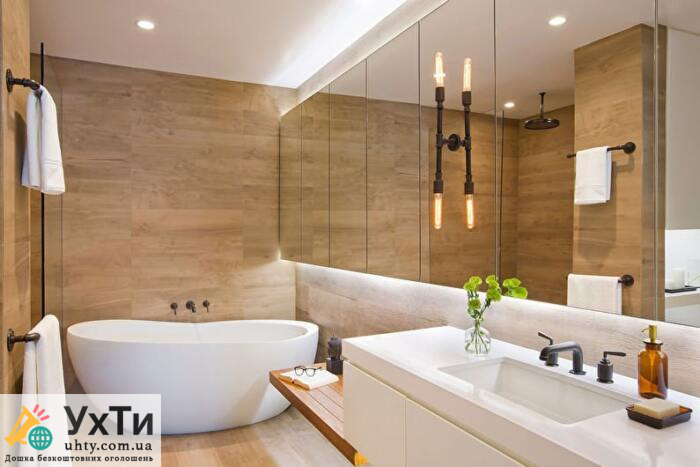
Shower enclosure designs with a drain placed directly in the floor are gaining popularity, and manufacturers of plumbing equipment offer more and more new elements of equipment. In addition to aesthetic values, such a solution also has practical advantages - it provides comfortable access to the shower, makes it easier to keep the bathroom clean, and in the event of a washing machine breakdown, it protects other rooms from flooding. Spraying can be performed in several ways, depending on the installation possibilities and the complexity of the work. The simplest solution is to install a ready-made flat shower tray (acrylic, stone conglomerate or enameled steel) in a floor niche. Another convenient solution is to use a ready-made under-tile panel with a ready-made shaped drain and seal.
Ultra-flat drain
Installed in the bathroom floor or in the shower sink.
It will be more laborious to independently form the floor with the appropriate slope and cover it with ceramic tiles. However, to create a floor shower tray in the floor layer, it is necessary to place a drainage pipe and a siphon, which, depending on the type of elements used, requires the creation of an installation groove 7-15 cm deep relative to the floor surface.
When the bathroom is located on the ground floor or above the basement, we have the potential to easily connect the drain with the appropriate slope to the sewer riser, but in a floor on the ground this can be a problem if the riser has been concreted into the ground and it is not possible to insert the drain low enough. Regardless of the chosen design, laying under-tile waterproofing membranes using liquid foil and sealing tape must be done very carefully.

