
Choosing the right lighting for any room can be a difficult decision. It is necessary to take into account the purpose, form and functions of the application. In turn, design and aesthetics also play a role in this equation.
With so many options on the market, it takes expertise to determine the best option for a room. And an art gallery or museum can become an even more difficult task than lighting up an ordinary space. However, track lamps greatly simplified this process.
Track lamps and daylight: CRI and color temperature
Natural lighting is very important for displaying or creating works of art, as sunlight has a higher color rendering index (CRI). CRI represents the ability of a light source to accurately display the colors of various objects; this is the most reliable representation of real colors in a work of art. If it is not possible to turn on natural lighting, track lamps are the closest artificial source to the natural world. Track lamps simulates the properties of sunlight, in particular, the color rendering index and the color temperature of the light.

Contrary to popular belief, sunlight is not yellow. At a color temperature of 5200 to 6400 Kelvin, sunlight is actually blue. These are the closest temperatures to which artificial lighting can reach, as well as the recommended color temperature range for artistic lighting.
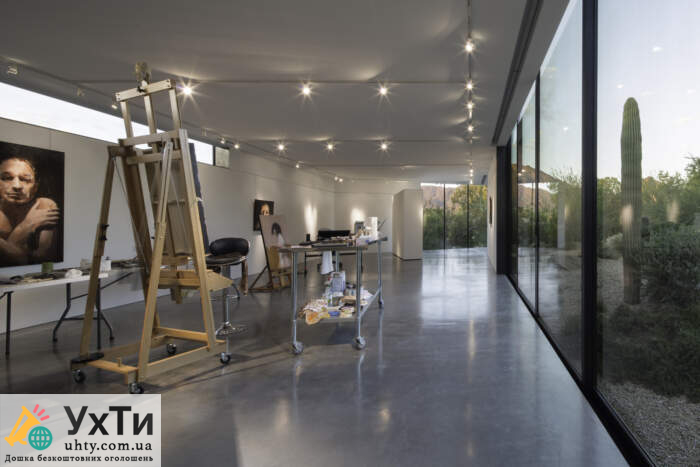
Advantages of track lighting
More and more art galleries and retail stores are changing halogen and fluorescent lamps to track lighting. One of the initial problems of art galleries is related to the costs associated with this technology. However, although they are more expensive than traditional lamps, their prices have fallen to the level of prices for halogen or fluorescent lamps. In addition, when making a final decision, it is necessary to consider the advantages of using LED lighting for art, including the reduction of electricity bills and the preservation of works of art (due to the release of less heat on the 80% than a halogen lamp).
Conventional lamps lighting consumes part of the power of traditional gallery lighting, and the thermal radiation of some lamps has become problematic. One of the most useful aspects of LED track lighting is that it reduces heat generation and improves color rendering. This is important in any space, but in such a space as an art gallery, they are key elements for its effective display and preservation. In fact, even when dimmed, LED track lights retain a sufficient spectrum of light to display true colors correctly.

