
The success of many military operations depends on stable and uninterrupted communication between the operator and the drone. Transmitters and receivers are critical components that provide this connection. This article is an advanced technical guide that will help you understand the key aspects of choosing **drone transmitters and receivers** to ensure maximum effectiveness in any conditions.
Frequency and power selection: the basis for reliable communication
One of the most important parameters is the frequency range. The most common frequencies for drones are **2.4 GHz** and **915 MHz**.
- 2.4 GHz is the standard frequency for many devices. It is suitable for most tasks, but in high-interference battlefield conditions it can suffer from instability.
- 915 MHz provides significantly greater signal penetration through obstacles and allows for longer communication ranges. This makes it an ideal choice for **military drones** and open-air operations where maximum stability is important.
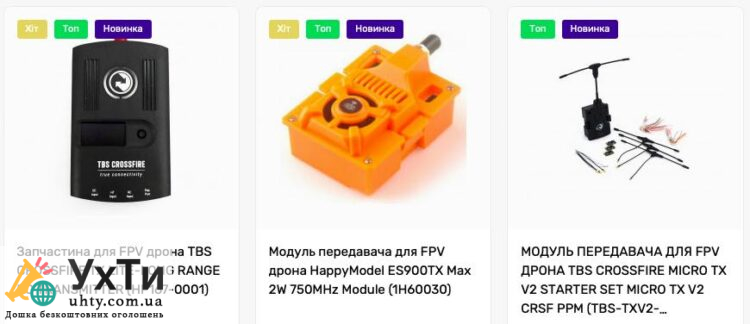
In addition to frequency, it is important to consider the power of the transmitter. It determines how far the signal can be transmitted without losing quality. For missions where maximum **communication range** is important, high-power transmitters such as **TBS Crossfire** are the optimal choice, ensuring a reliable connection in difficult conditions.

Overview of popular FPV system models
There are several leaders on the market that have proven themselves as reliable solutions for professional use. One of them is TBS Crossfire, which is known for its ability to work in strong interference conditions and supports a range of up to 100 km. Another popular option is the **FrSky R9M**, which offers high range and excellent compatibility with various protocols. For those looking for a universal solution, the **Radiomaster TX16S** is an ideal choice, as this multi-protocol transmitter can easily adapt to any conditions on the battlefield.
To ensure stable communication, the choice of receiver is also critically important. Modern receivers, such as the FrSky R9 Slim+ or TBS Crossfire Nano RX, have high sensitivity and the ability to work in difficult conditions. You can familiarize yourself with the available models on the website PC Smart.
Antennas and amplifiers: how to amplify the signal
To maximize the efficiency of your **drone**, it is important to choose the right additional components. Antennas play a key role in increasing range and stability. It is worth choosing models with a high gain, for example, TBS Triumph Pro or ImmersionRC SpiroNet, which are designed to work in high interference conditions. In addition to antennas, signal amplifiers from Hawkeye or Lumenier can significantly improve communication quality over long distances. You can learn more about these components here.
There are also ready-made transmitter and receiver kits available on the market, which are a great option for beginners. These kits from FrSky or TBS combine reliability, optimal range, and stability.
Conclusion
Choosing transmitters and receivers is a crucial step in preparing for military missions. Pay attention to technical aspects such as frequency, power and communication range, and choose proven brands. By using reliable components, you can be sure of the success of your operation.
You can find out about all available models and kits on the website PC Smart.

