
There are a lot of models of high-heeled boots from different manufacturers from all over the world. How to choose the right ones, what to pay attention to?
Field boots
Everyone defines their own goals and objectives. What are you going to do? Walk in the woods, go cross-country, climb mountains, or just impress girls on the streets of the city? There are models for each of these tasks.
We will not consider boots that simply require an aggressive look, everything here determines your taste. Shoes for field conditions should protect your feet from injuries and abrasions, cold and water. The result of the hike largely depends on the condition of your feet, and this is what we will start from.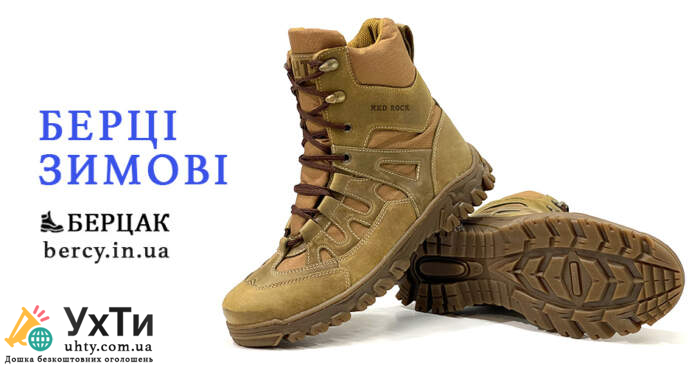

Mobility or protection?
If you have to move actively in conditions of very rough terrain (for example, in the mountains), take a closer look at army mountain boots with a shortened upper, which provides greater ankle mobility, stiffer for protection from stones, as well as trekking boots. There are also lightweight models (for example, the famous «Chechen» boots), their main difference is low weight, great freedom for the ankle, unlike traditional models. Low weight is ensured by a thinner sole, composite materials of the boot itself (for example, Cordura inserts). Such boots are made for walking a lot and even running. The main drawback is that they do not hold water and dirt well, and they get muddy faster in slush.
Classic boots are more versatile and combine physical protection of the ankle from sprains and the foot due to reinforcing inserts and arch supports, moisture resistance and hydrophobicity of the boots due to sewing and impregnation of the leather, and are able to provide the foot with some mobility due to the cut and inserts.
The Bercak company offers classic models of berets, both traditional and lightweight.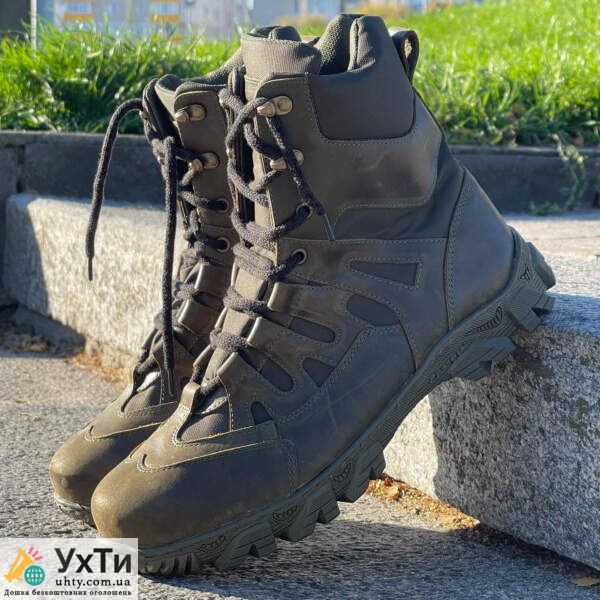
Sole
Special requirements are imposed on the sole. Here are the main criteria:
Material. Its choice depends on the utilitarian tasks and the season of wearing. For example, thermoplastic elastomer is good for cold weather. It has a hard and durable outer layer, and a softer, porous inner layer. Due to this, such a sole does not let the cold in from the outside. But polyurethane is good for the off-season and summer: it is durable, flexible, wear-resistant, but not designed for low temperatures.
Tread: The tread pattern of the sole determines whether the sole will grip well on ice, whether the sole will collect dirt and grass, and whether rocks and gravel will get stuck in it.
Weight. The weight of the shoes depends mainly on the sole material, the texture of the tread, and the total thickness of the sole. Ankle boots are not the lightest shoes, even if we are talking about «Chechen» ankle boots, so focus on your needs and capabilities.
Geometry. The sole should not be flat if you are going to not only stand confidently, but also walk confidently. Boots are not sneakers, they have a stiff sole anyway, and without some angle between the toes and the heel plane, walking in them can be difficult.
Impregnation and vulcanization. The sole of shoes used in gasoline, engine oil, and solvents must be protected by impregnation or vulcanization.
Berets manufactured by the Bertsak company are equipped with soles made of the most modern and practical materials, selected according to the season and wearing conditions.
A hollow heel is the most common cause of shoe failure. A cast heel makes shoes heavier, but shoes with it will last for years.
Seasonality
The ideal time to wear berets is the off-season with a temperature range from minus ten to plus ten degrees. Of course, nothing prevents you from wearing berets in the heat and frost, but for this it is still better to choose the appropriate footwear.
We have considered the properties of lightweight boots. Let's summarize their differences:
Breathability and enhanced ventilation
Low weight due to inserts of Cordura and similar materials, a thinner and lighter sole, and perforations on the upper part of the boot.
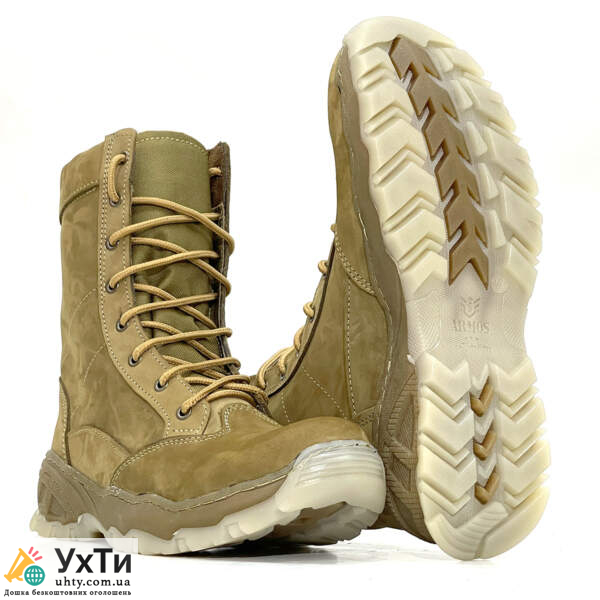 But for cold weather, you need heavy boots made of thick leather, with a thick sole made of thermoplastic elastomer or vulcanized rubber, and insulation.
As insulation, fur, artificial and natural, as well as composite inserts made of leather and membrane materials (gortex, sympatex and their analogues), are used, which do not let moisture in from the outside and are able to maintain the temperature inside. According to the manufacturers of shoes with membrane linings, the foot in such shoes does not freeze, does not sweat, the membrane effectively removes moisture. And if fur simply insulates well and retains heat, then everything is not so simple with the membrane.
First, your feet will still sweat in the membrane. More or less is an individual matter, but if you do a march-throw, your feet will still be wet. And these shoes smell no better than others.
The membrane requires special care: you cannot dry such shoes by the fire, the membrane will lose its properties.
Boots with leather and membrane insoles should be worn with special socks (they do not have hard, protruding seams) so that the insoles do not wear out prematurely. A mechanically damaged insole makes the membrane useless, and it immediately loses its advantages over other materials.
Price. Boots with a membrane cost 3-5 times more than regular ones. Is sheepskin worth the price? It's up to you.
The material from which the boots are made
Modern technologies offer a variety of materials that can replace or complement classic chrome leather (nubuck, suede, cordura). For Ukraine, chrome leather is optimal: durable, elastic, heat-insulating, moisture-resistant. An important competitive advantage of chrome leather is the price/quality ratio. Such shoes are inexpensive, while working out every penny invested in them.
You shouldn't expect miracles from your boots: if you climb into a puddle or walk through wet grass or a swamp, sooner or later any berets will get wet. These are not rubber boots after all. But good berets are guaranteed to last for several hours, due to the impregnation and quality of the leather.
Some modern materials require special care: traditional products (gutalin, wax, castor oil) are not suitable for them. When choosing shoes, pay attention to this point: will you be able to buy the necessary shoe cream at any time?
Bercak boots are made of chrome leather, and some models use composite materials designed for use in specific conditions.
Lace-up and zippers
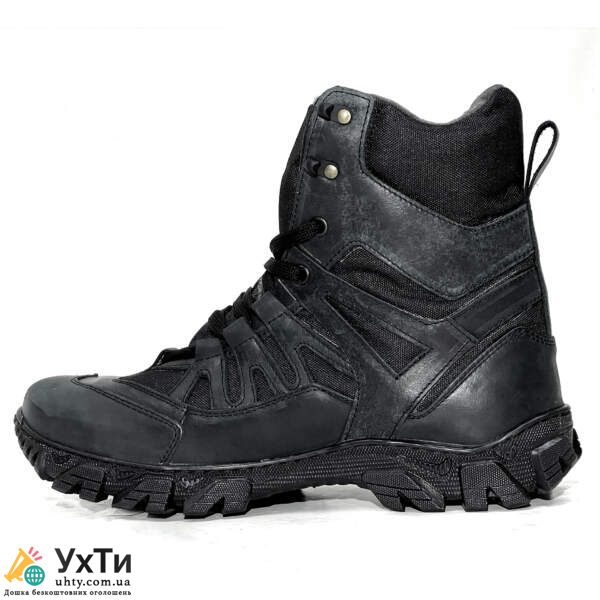
Without lacing, boots are not boots. The lacing helps support the ankle on rough terrain and protects it from injuries and sprains. The lacing helps fit the boot to the foot, without being too tight or too loose. To avoid chafing during long hikes, the boot should fit snugly to the foot.
The side zipper is designed for the ability to quickly take off or put on boots, this is just a matter of convenience.
Some berets have a quick lacing system that allows you to quickly tighten the boots in an emergency. These are special hooks at the top of the beret that allow you to quickly put on and tighten the laces.
Army statutory or civilian berets?
There is a myth that army berets, especially Western ones, are somehow better than civilian beret models. What is their increased “coolness” about, other than some idea of mythical quality? Actually, nothing.
The main limitation of any army footwear is that they must be low-budget, that is, very cheap for the state, while maintaining maximum quality. In fact, we can say that army berets must honorably withstand the service life of a soldier, and in modern armies it is on average from several months to several years. As practice shows, in technologically developed countries, the technology for producing army footwear copes with this task - the boots will last the service life, and not longer. American military footwear is made with a large margin of safety. And all Bundeswehr ammunition is designed specifically for the service life. If you want to understand how long army boots will last you - focus on this term.
Not every army in the world is ready to provide its soldiers with something special. If you have seen Italian army berets, you understand what I mean. The same applies to British boots: you are unlikely to find any advantage over ordinary working shoes.
The only exception is berets for elite army units, special forces. They usually do not save money on their development and production. Such berets are usually more like trekking boots, where every little thing is thought out. You can kick down doors, run, climb trees and mountains in them. You can also buy such shoes in civilian versions, they will cost a small salary, and you are unlikely to dare to mix dirt in them.
And don't forget: the army berets of foreign armies were not designed for our climate and conditions. Walk in yellow nubuck trekking boots through the wet mud of the forest, you will quickly understand the difference.
Conclusion
If you don't have your own preferences and experience yet, start with inexpensive universal boots. Beretsak boots are sewn according to traditional patterns of proven army boots, taking into account the nuances. We offer berets for any season: summer, demi-season, winter. Take a look at what we offer, you will undoubtedly find the right model.
If you are interested in buying boots wholesale, check out our offer https://uhty.com.ua/advert/bertsi-taktychni-olyva-1112/ .

