

Replacing freon in the air conditioner is a key maintenance step for its efficient and long-lasting operation. Freon does not wear out over time, but its level can decrease due to leaks. In such cases, the air conditioner stops cooling the air properly. In this article, we will take a detailed look at when and how often you need to change the freon, as well as what to do if you notice problems with the operation of your device.
Air conditioner repair specialists at the service center www.conditioning.com.ua explain that refilling freon is necessary in the event of a leak of this gas or when its level becomes insufficient for the air conditioner to operate effectively.

What is Freon and how does it work?
Freon is the general name for a group of colorless gases used as coolants in air conditioners, refrigerators, and other temperature control systems. Freon absorbs heat from the room and transfers it to the outside through a condenser. During this process, Freon changes from a gaseous state to a liquid state and vice versa, which allows it to effectively maintain the desired temperature in the room.
Freon is the main part responsible for the cooling process. Without it, the air conditioner will not be able to function properly.
Why might freon leak?
Freon does not lose its properties and does not wear out normally. However, there are cases when its level in the system decreases, which leads to a deterioration in the operation of the air conditioner. The main reasons why freon needs to be renewed or replenished are the following:
- Leakage in the system.
If there is a freon leak in the air conditioner, it will gradually evaporate and the system will not be able to work efficiently. Leaks can be caused by mechanical damage to the pipes or poor connections in the air conditioner. In such cases, you need to eliminate the leak and refill the system with new freon. - Incorrect installation.
If the air conditioner has been installed incorrectly, such as loose pipes or improper sealing, it may cause freon to leak. Therefore, before refilling the air conditioner, professionals should check it for leaks. - Damage to components.
If the internal parts of the air conditioner, including the compressor, are not working properly, it can damage the freon system. In this case, not only the freon but also some of the air conditioner components will need to be replaced. - The natural aging process.
If the air conditioner is operated for a very long time without checks and maintenance, the freon level can gradually decrease even without obvious sources due to the natural aging of the system.

Screenshot
How often should the air conditioner be refilled?
The frequency of refilling Freon depends on several factors, including the technical condition of the air conditioner and its operation. Here are the main recommendations:
- With a new air conditioner.
If the air conditioner is new, then refilling with freon may only be necessary after a few years, provided there are no sources. As a rule, new air conditioner models have sealed systems that do not lose freon for many years. - If the air conditioner is old.
Older air conditioners can leak freon, especially if they are not regularly serviced. In this case, if you notice a decrease in cooling efficiency, you should check the freon level and, if necessary, top it up. - Annual maintenance.
Many experts recommend having your air conditioner serviced once a year, including checking the freon level. Even if your air conditioner is working properly, this will help prevent future problems. - Freon leak.
If a freon leak is detected or the air conditioner is not operating at full capacity, it is necessary to urgently replenish its level by eliminating the cause of the leak. In such cases, freon replacement may be necessary regardless of the age of the device.
How to refill freon in an air conditioner?
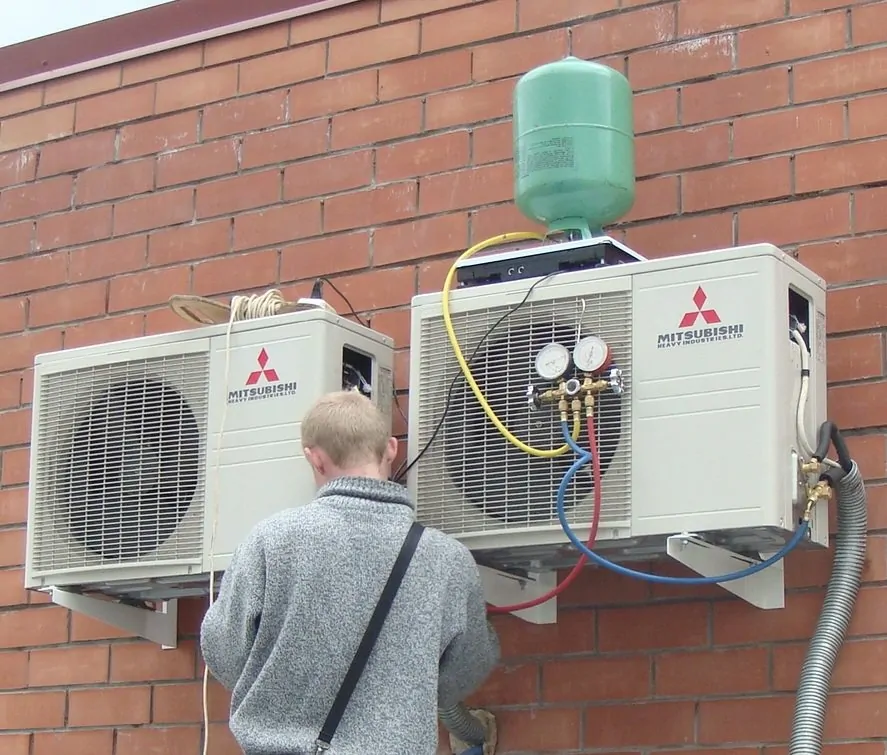
It is best to have a professional refill your air conditioner, as this process requires special equipment and knowledge. Here are the steps to refill your air conditioner:
- Checking the system for leaks.
Before refilling the freon, a specialist checks the system for leaks. Special leak detectors are used for this. - Removing old freon.
If the freon level is low, it is necessary to first remove the old gas from the system using a vacuum pump. This process avoids contamination with the new freon. - Refilling with new freon.
Once the system is purged of the old freon, new freon is added. It is important to know the exact amount of freon that your air conditioner needs, as too much can cause the system to break down. - Checking the operation of the air conditioner.
After refilling the air conditioner with freon, its operation is checked. The specialist checks the temperature, cooling capacity and other parameters to make sure that the system is working properly.
How to save freon and avoid problems?
To keep your air conditioner running efficiently and prevent freon leaks, it's important to regularly check its condition and perform proper maintenance. Here are some tips:
- Don't forget about regular air conditioner maintenance.
It is recommended to have your air conditioner checked once a year to ensure its safe operation. - Correct operation.
Avoid overloading the air conditioner, overheating, and dirtying the filters, as this may cause malfunctions in the cooling system. - Elimination of leaks.
If a leak is detected, contact professionals immediately to fix the problem, otherwise the freon will leak and the air conditioner will not be able to work effectively.
General recommendation
Updating the freon in your air conditioner is an important step in its maintenance. Regardless of whether you have a new or old model, regular maintenance and timely replenishment of freon will help your air conditioner work for a long time and without breakdowns. Remember that checking the freon is not just about ensuring comfort, but also maintaining the energy efficiency and durability of your equipment.

