
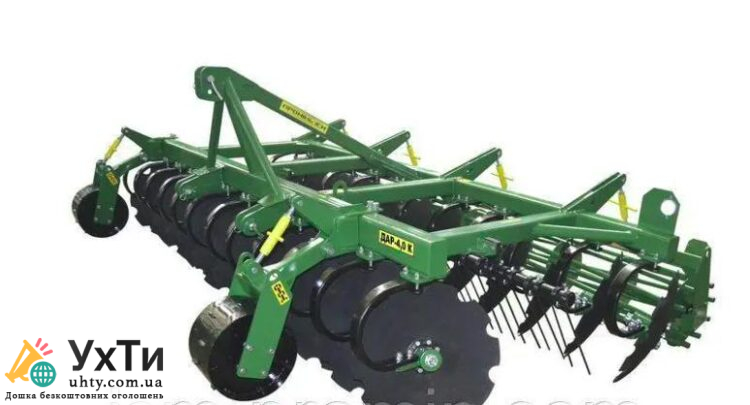
A disk harrow is an indispensable tool in modern agriculture, providing effective soil cultivation, field preparation for sowing, and weed control. Let's take a closer look at the technical components of a disk harrow, its advantages, and its importance for the agricultural sector.
Main technical components of a disc harrow
- Disks
- Material and diameter: The discs are made of high-strength steel, which ensures their durability and resistance to wear. The diameter of the discs varies depending on the model and purpose of the harrow, usually ranging from 450 to 610 mm.
- Form: Discs can be smooth or serrated. Serrated discs penetrate the soil better and provide better mixing of plant residues.
- Frame
- Construction: The disc harrow frame is made of high-strength metals and has a rigid structure that can withstand heavy loads. This ensures stability and reliability of operation even in difficult conditions.
- Regulation: Many harrow models are equipped with systems for adjusting the angle of attack of the discs, which allows you to adjust the depth of cultivation and the degree of soil crushing.
- Suspension system
- Floating suspension: Disc harrows are often equipped with floating suspension, which allows the discs to adapt to the unevenness of the field. This ensures uniform soil treatment and reduces the risk of damage to the equipment.
- Shock absorbers: Shock absorbers absorb vibrations and shocks during operation, increasing operator comfort and reducing wear and tear on mechanisms.
- Drive mechanism
- Cardan shaft: The cardan shaft transmits power from the tractor to the harrow discs, ensuring their stable operation and soil cultivation efficiency.
- Reducer: The gearbox allows you to adjust the optimal speed of rotation of the discs, which affects the quality of soil cultivation.
Advantages of using disc harrows
- Improving soil structure
- A disc harrow loosens the soil, improving its structure and aeration. This promotes better penetration of water and air to the root system of plants, which has a positive effect on their growth and development.
- Preparing the field for sowing
- The disc harrow ensures uniform mixing of plant residues and fertilizer residues with the soil, which creates optimal conditions for sowing new crops.
- Weed control
- Cultivation with a disk harrow helps to destroy weeds, reducing their competition with cultivated plants for water, light and nutrients.
- Reducing soil erosion
- Shredded plant residues mixed with the soil form a protective layer that reduces the risk of erosion caused by wind and water.
Innovative technologies in disc harrows
- Automatic control systems
- Modern disc harrows can be equipped with systems for automatic adjustment of the angle of attack and depth of cultivation, which allows you to optimize the cultivation process depending on field conditions and soil type.
- Monitoring and diagnostic systems
- Integrated sensors and monitoring systems allow you to monitor the condition of the harrow and the soil cultivation process in real time. This helps to avoid breakdowns and reduces maintenance costs.
- Energy-efficient drives
- The use of energy-efficient drives reduces fuel consumption, which is not only economically beneficial, but also contributes to environmental protection.
- Security systems
- Modern disc harrows are equipped with various safety systems, such as automatic shutdown in case of overload or collision with obstacles, which increases operational safety and protects the equipment from damage.
Conclusion
A disc harrow is an important tool for modern agriculture, ensuring efficient and high-quality soil cultivation. Thanks to advanced technologies and high-quality components, modern disc harrows are characterized by high productivity, reliability and ease of operation. By investing in a disc harrow, you get a reliable assistant that will greatly facilitate your agricultural work and increase their efficiency, helping to improve soil structure, reduce erosion and combat weeds.

